













-
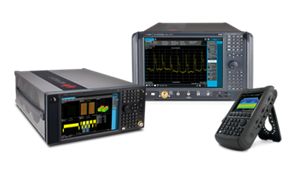
Benchtop
AnalyzersWide range of analyzers from basic analysis to advanced R&D


-
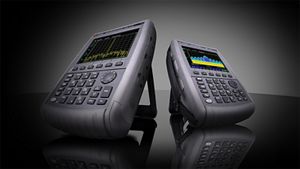
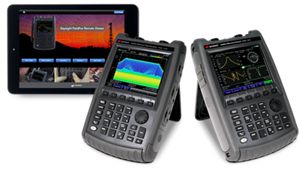
Handheld
AnalyzersRugged and portable for comprehensive RF field testing


-
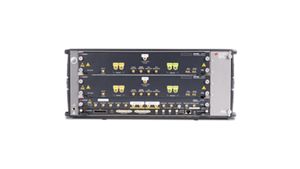
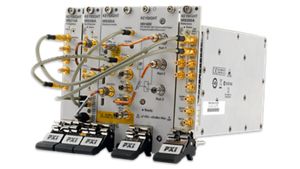
Wireless
AnalyzersModular and scalable test platform that captures and decodes


-
Audio
AnalyzersConfigurable audio test solutions for high-performance measurements
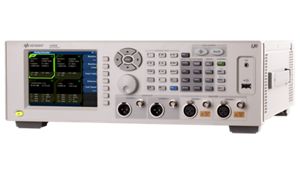





Audio Analyzers
Keysight AZ2-class audio analyzers include the U8903B. Designed for multifunction and high-performance measurements, Keysight’s audio analyzer offers low residual distortion of less than -110 dB and an analysis bandwidth of 1.5 MHz. This ensures you achieve the highest resolution available for two-channel measurements. With versatile options including Bluetooth® audio measurements, digital audio, and voice quality analysis, our audio analyzer is fully configurable to meet your specific application needs. Experience precision and flexibility in audio testing.




Wide range of analyzers from basic analysis to advanced R&D
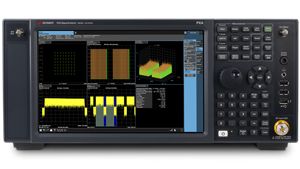
Benchtop Signal and Spectrum Analyzers
Keysight benchtop signal and spectrum analyzers enable you to troubleshoot and debug designs, perform higher-level RF analysis, and ensure compliance with next generation standards like 5G New Radio (NR), Wi-Fi 6E / 7, and Narrowband IoT (NB-IoT). Select the analyzer performance you need based on maximum frequency and analysis bandwidth and phase noise. Explore our wide range of benchtop signal and spectrum analyzers from Essential to Pro performance grades to find the one that is right for your application.


Essential

Starting from
Maximum frequency
Maximum analysis bandwidth
Phase noise @1 GHz (10 kHz offset)
DANL @1 GHz

Expert
Starting from
Maximum frequency
Maximum analysis bandwidth
Phase noise @1 GHz (10 kHz offset)
DANL @1 GHz

Rugged and portable for comprehensive RF field testing

Modular and scalable test platform that captures and decodes

Configurable audio test solutions for high-performance measurements

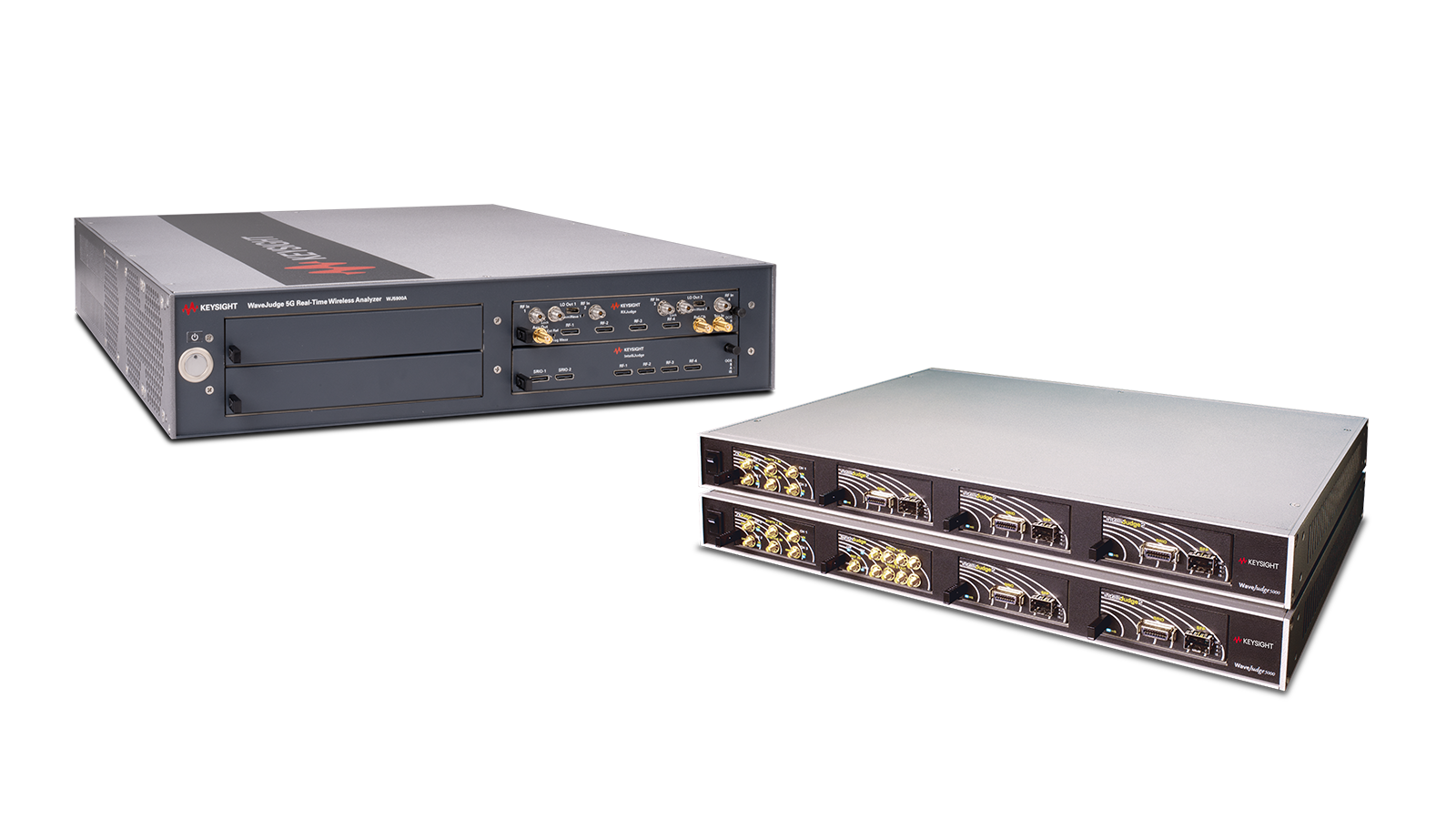
Scalable, flexible, multi-channel solution that minimizes rack space
Capture real-world GNSS, cellular, and Wi-Fi signals in the field and replay them in the lab for repeatable, controlled test scenarios.
Find the Signal and Spectrum Analyzer for You in Minutes
To view this video please enable JavaScript, and consider upgrading to a web browser that
supports HTML5 video
applications.
Find Compatible Software and Accessories for Your Analyzer
Enhance the capabilities of your signal and spectrum analyzers with software for automated testing, complex signal analysis, and data visualization, as well as accessories such as external mixers, frequency extenders, and probes.
Explore Signal and Spectrum Analyzer Use Cases
Signal and spectrum analyzers support a wide range of measurements across various industries, discover them all
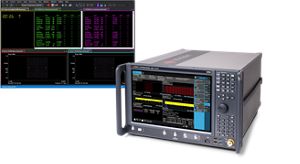
Wireless communications
for a DUT in 5G NR Systems
EVM by suppressing system noise in 5G NR receivers.

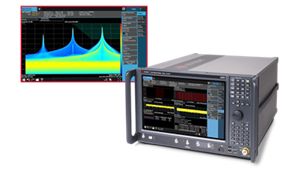
Aerospace and defense
Receivers for Wideband Interfering Signals
signals with wideband real-time spectrum analysis.

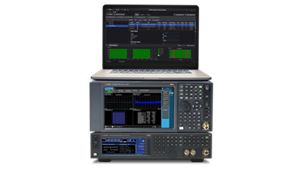
Healthcare
Coexistence for Medical Devices
medical devices in the presence of intended and interfering radio signals.

Wireless communications
Interference
signals and interference using real-time spectrum analysis.

Wireless communications
How to Make 6G D-Band Noise Figure Measurements
6G research prototyping and system performance validation.


Services and support
Innovate at speed with curated support plans and prioritized response and turn-around times.
Get predictable, lease-based subscriptions and full lifecycle management solutions—so you reach your business goals faster.
Experience elevated service as a KeysightCare subscriber to get committed technical response and more.
Ensure your test system performs to specification and meets local and global standards.
Make measurements quickly with in-house, instructor-led training, and eLearning.
Download Keysight software or update your software to the newest version.
Frequently Asked Questions
A spectrum analyzer is a test and measurement instrument used to measure and visualize signal amplitude as a function of frequency. It provides a frequency-domain view of RF, microwave, wireless, and electrical signals, helping engineers identify signal power, harmonics, distortion, spurious emissions, interference, and noise.
Unlike an oscilloscope, which shows voltage versus time, a spectrum analyzer shows how signal energy is distributed across frequency.
Modern spectrum analyzers are used to measure:
- Frequency range, from Hz to GHz or mmWave bands
- Amplitude, commonly measured in dBm, dBµV, or dBc
- Resolution bandwidth, or RBW
- Displayed average noise level, or DANL
- Phase noise, measured in dBc/Hz
- Adjacent channel power, or ACP
- Occupied bandwidth
- Spurious emissions
- Harmonic distortion
- Real-time transient RF events
Keysight signal and spectrum analyzers support RF and wireless applications such as 5G New Radio, Wi-Fi 6E / 7, Narrowband IoT, radar, satellite communications, EMI troubleshooting, and field interference analysis.
Choose a signal, spectrum, or wireless analyzer by matching the instrument’s frequency coverage, analysis bandwidth, sensitivity, dynamic range, phase noise, portability, and software capabilities to your measurement task.
Start with these application requirements:
- Signal frequency: Select an analyzer that covers your carrier frequency,
harmonics, and spurious search range. - Analysis bandwidth: Use wider bandwidth for 5G NR, Wi-Fi 7, radar pulses,
satellite links, and wideband modulation analysis. - Sensitivity: Look for low DANL when detecting weak signals or emissions close
to the noise floor. - Dynamic range: Choose higher dynamic range when measuring low-level spurs near
high-power carriers. - Phase noise: Prioritize low phase noise for oscillator, radar, satellite,
aerospace, and high-performance wireless testing. - Form factor: Use benchtop analyzers for R&D, handheld analyzers for field
RF testing, wireless analyzers for protocol and network troubleshooting, and modular
PXIe analyzers for automated test systems.
Keysight offers Essential, Expert, and Pro benchtop signal and spectrum analyzers that can be selected based on maximum frequency, analysis bandwidth, phase noise, DANL, and real-time spectrum analysis capability.
Key specifications for a signal, spectrum, or wireless analyzer include frequency range, resolution bandwidth, analysis bandwidth, dynamic range, DANL, phase noise, amplitude accuracy, real-time bandwidth, and measurement software support.
Important specifications include:
- Frequency range: Defines the lowest and highest frequencies the analyzer can
measure. - Resolution bandwidth, or RBW: Determines how well the analyzer separates
closely spaced signals. Narrow RBW improves frequency resolution and lowers displayed
noise, while wider RBW enables faster sweeps. - Analysis bandwidth: Defines the instantaneous bandwidth available for
demodulation, vector signal analysis, and wideband capture. - Dynamic range: Determines how well the analyzer can measure weak signals in the
presence of stronger signals. - DANL: Displayed average noise level indicates analyzer sensitivity. Lower DANL
improves weak-signal detection. - Phase noise: Indicates short-term frequency stability, typically specified in
dBc/Hz at a defined carrier frequency and offset. - Real-time spectrum analysis, or RTSA: Helps capture intermittent, transient,
pulsed, or frequency-hopping signals that may be missed by swept measurements. - Measurement applications: Consider support for EVM, ACPR, occupied bandwidth,
spurious emissions, EMI pre-compliance, pulse analysis, noise figure, and wireless
standards.
A spectrum analyzer measures signal power versus frequency. A vector signal analyzer measures both magnitude and phase to analyze digitally modulated signals. A real-time spectrum analyzer continuously captures spectrum activity to detect short-duration or intermittent RF events.
- Spectrum analyzer: Best for frequency-domain measurements such as harmonics,
spurious emissions, occupied bandwidth, carrier power, channel power, and EMI
troubleshooting. - Vector signal analyzer: Best for modulation quality measurements such as IQ
constellation, error vector magnitude, OFDM analysis, and demodulation of standards such
as 5G NR, LTE, Wi-Fi, and satellite waveforms. - Real-time spectrum analyzer, or RTSA: Best for capturing transient events such
as pulsed radar, frequency hopping, burst interference, wireless coexistence problems,
and intermittent field interference.
Keysight signal and spectrum analyzer workflows can support spectrum analysis, vector signal analysis, real-time spectrum analysis, and software-driven measurements for wireless, aerospace / defense, EMI, and phase-noise applications.
A signal analyzer is primarily used for frequency-domain analysis, while an oscilloscope is primarily used for time-domain analysis.
A signal analyzer displays how power is distributed across frequency. Engineers use it to measure RF characteristics such as carrier frequency, signal amplitude, phase noise, harmonics, occupied bandwidth, spurious emissions, and interference.
An oscilloscope displays how voltage changes over time. Engineers use it to view waveform shape, timing, rise time, jitter, transients, digital switching behavior, and circuit-level events.
In practice:
- Use a signal analyzer for RF, microwave, wireless, modulation, and spectrum
measurements. - Use an oscilloscope for time-domain waveform, digital, analog, and high-speed timing
measurements. - Use both instruments when debugging complex systems that require time-domain and
frequency-domain visibility.